

Do contraceptives affect fertility?
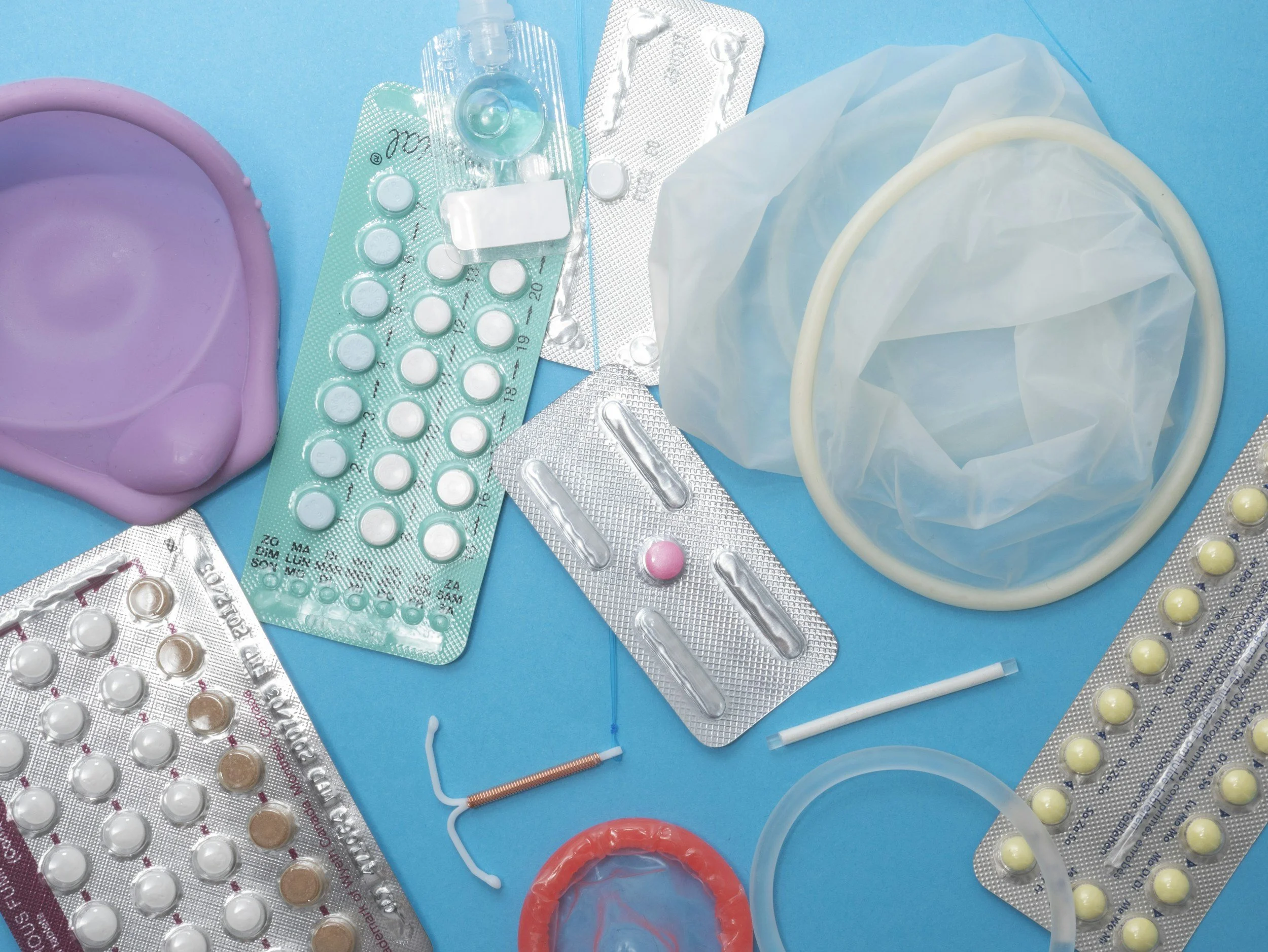
Multiple types of contraception including a diaphragm, spermicide, birth control pills, emergency contraceptive pill, internal and external condoms, vaginal ring, implantable hormone, and copper intrauterine device (IUD).
By Lee Hullender Rubin, DAoM, MS, LAc, FABoRM
Contraceptives and Fertility: What You Need to Know About Getting Pregnant After Birth Control
It’s a common question in fertility practices. Did my birth control cause my infertility? Many patients worry that using birth control, especially for years, might permanently affect their ability to conceive. Let me put your mind at ease: the research is clear and reassuring.
The Bottom Line: Contraceptives Don't Cause Permanent Infertility
Here's what the evidence tells us: contraceptive use, regardless of duration or type, does not have a negative effect on your ability to conceive after you stop using it. While you might experience a temporarydelay in return to fertility, this is typically brief and usually resolves within a few menstrual cycles.
A comprehensive systematic review analyzing 22 studies with nearly 15,000 women found that 83.1% became pregnant within the first 12 months after stopping contraception. This rate is comparable to couples who never used contraception at all.
Understanding "Temporary Delay" vs. "Permanent Infertility"
The distinction here matters. Some women experience a short delay—typically 2-3 menstrual cycles—before their fertility returns to baseline after stopping oral contraceptives. However, by 12 months following discontinuation, conception rates for former contraceptive users range from 72-94%, similar to other contraceptive methods and to women using no contraception.
Interestingly, one study from Boston University found that longer-term oral contraceptive use was actually associated with a higher likelihood of pregnancy compared to use for less than two years. This suggests that extended contraceptive use doesn't diminish fertility. It may even have some protective effects.
How Different Contraceptive Methods Compare
Let's break down how specific contraceptive types affect fertility:
Long-Acting Reversible Contraceptives (LARCs): What makes LARCs particularly appealing is that they can be removed, and you can resume trying to conceive immediately with no "wash out" period required.
Copper IUD: This non-hormonal option works by creating endometrial inflammation through increased cytokine activity, which affects sperm migration, viability, and disrupts the acrosome reaction. Importantly, you still ovulate while using a copper IUD, and there's no impact on endometrial thickness. After removal, fertility returns quickly. Studies show 71-92% of women conceive within 12 months after copper IUD removal.
Hormonal IUD (Levonorgestrel): The LNG-IUD works differently. It thickens cervical mucus, creating a barrier that reduces sperm access to the upper reproductive tract and prevents fertilization. It also causes endometrial decidualization and glandular atrophy, and may inhibit sperm-egg binding by increasing glycodelin A production. Despite these mechanisms, research shows 75-79% of women conceive within 12 months after removal—comparable to the copper IUD.
Oral Contraceptives
The historical concern about 'post-pill amenorrhea syndrome' causing long-term fertility impairment is not supported by current evidence. As Barnhart and Schreiber noted in their 2009 review in Fertility and Sterility, more recent studies have found no association between oral contraceptive use and secondary amenorrhea, and no permanent alterations in reproductive function.
In the 12 months following discontinuation, conception rates for former oral contraceptive users range from 72-94%. Another pooled analysis showed 83.1% of women became pregnant within the first 12 months after stopping the pill.
The temporary delay some women experience typically lasts only 2-3 cycles as the body clears exogenous hormones and the hypothalamic-pituitary-ovarian axis resumes normal function.
Why the Reassuring Data?
These findings make biological sense. Modern contraceptives work by temporarily suppressing ovulation or preventing fertilization. They don't damage the reproductive organs or permanently alter hormonal function. Once you stop using them, your natural reproductive system resumes control.
The slight delay some women experience reflects the time needed for:
Hormonal contraceptives to clear from your system
Your ovaries to resume regular ovulation
Your endometrial lining to return to its natural cyclical pattern
Your cervical mucus to return to fertility-promoting consistency
What About Other Factors?
When discussing fertility after contraception, we must remember that many other factors influence conception:
Age: Fertility naturally declines with age, particularly after 35. Some women attribute difficulty conceiving to their past contraceptive use when age is actually the primary factor.
Underlying conditions: Many women use contraceptives to manage conditions like endometriosis, PCOS, or irregular cycles. These conditions—not the contraceptive—may affect fertility when you're ready to conceive.
Partner factors: Male factor infertility accounts for about 40-50% of infertility cases and has nothing to do with contraceptive history.
The Clinical Bottom Line
As a fertility specialist, I counsel patients that modern contraceptives are safe, effective, and fully reversible. Whether you choose oral contraceptives, an IUD, or another method, you can feel confident that when you're ready to start your family, your contraceptive history won't stand in your way.
The research is unequivocal: contraceptive use does not cause permanent infertility. While some temporary delay may occur (usually just a few cycles), the vast majority of women conceive successfully within 12 months of discontinuation at rates comparable to those who never used contraception.
If you're currently using contraception and thinking about future fertility, choose the method that works best for your current needs without worrying about long-term reproductive consequences. And when you're ready to conceive, you can do so with confidence.
Citations
Girum T, Wasie A. Return of fertility after discontinuation of contraception: a systematic review and meta-analysis. Contraception and Reproductive Medicine. 2018;3:9. https://doi.org/10.1186/s40834-018-0064-y
Barnhart KT, Schreiber CA. Return to fertility following discontinuation of oral contraceptives. Fertility and Sterility. 2009;91(3):659-663. https://doi.org/10.1016/j.fertnstert.2009.01.003