
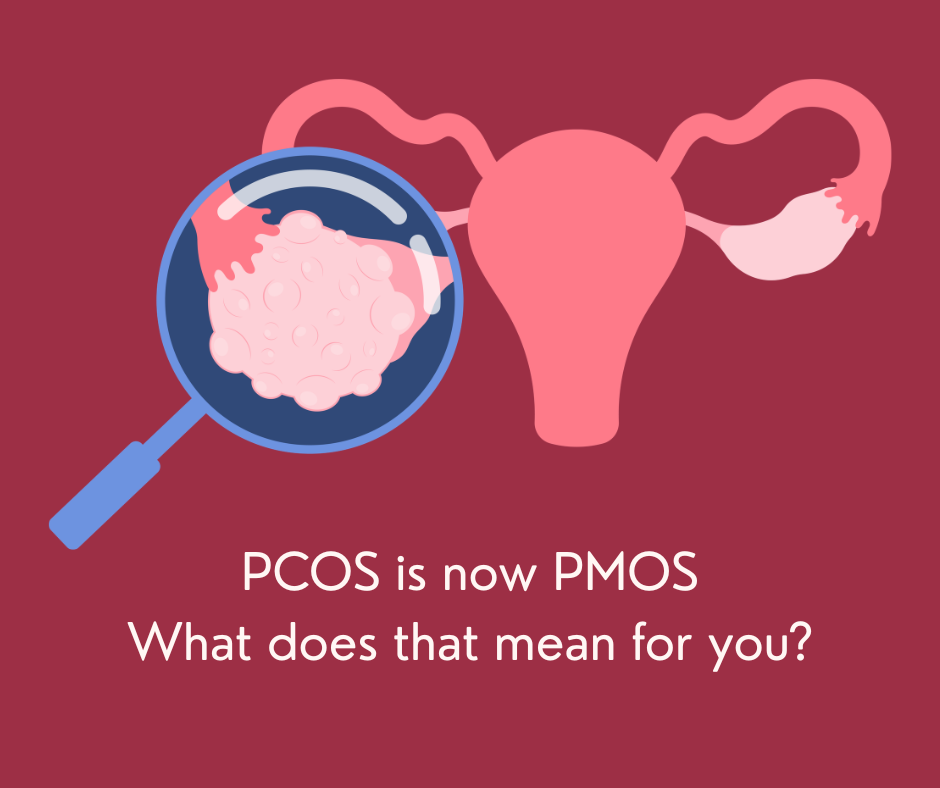
A graphic of a uterus under a magnifying glass. Text below reads, "PCOS is now PMOS What does that mean for you?"
By Lee Hullender Rubin, DAoM, MS, LAc, FABORM
PCOS has a new name, and it’s about time
The new name captures the complexity of the diagnosis. East Asian Medicine acknowledged that complexity all along.
If you've been living with a diagnosis of polycystic ovary syndrome (PCOS), or you've been trying to figure out whether what's happening in your body fits that label, you may have recently seen something in the news: PCOS has been officially renamed. The new name is polyendocrine metabolic ovarian syndrome, or PMOS.
It's a mouthful. But the name change is, in reality, a big deal, and for good reason.
This post will walk you through what changed, why it took so long, what the new name means for how the condition is understood and diagnosed, and where East Asian Medicine fits into the picture.
Why "polycystic ovary syndrome" was always the wrong name
Here's something that might surprise you: most people with PCOS don't actually have cysts on their ovaries. The "cysts" the name refers to are actually small, immature follicles: eggs that didn't fully develop. They aren't pathological cysts the way the name implies, and their presence isn't even required for a diagnosis.
That mismatch caused real problems. Some people were told they had something wrong with their ovaries. Some people were told nothing was wrong because there were no cysts on their ovaries. The actual picture was much more complicated. Clinicians sometimes missed the diagnosis entirely, or dismissed symptoms, because they were looking for ovarian cysts and not finding them. Patients left appointments confused and unsatisfied. Some spent years searching for answers.
The name also anchored the condition in gynecology and reproductive medicine, which meant the metabolic, hormonal, psychological, and dermatological pieces often got ignored or undertreated.
Researchers and patient advocates had been pushing for a name change for over a decade. A 2012 workshop convened by the US National Institutes of Health flagged the problem directly and recommended a change. It stalled. Again and again, the effort didn't gain enough momentum to move forward.
How the new name came to be, and why it matters that patients led the way
What finally worked was a global, coordinated process that centered the people most affected.
Published in The Lancet in May 2026, the name change was the result of a multi-year effort led by researchers at Monash University, the Androgen Excess and PCOS Society, and Verity, a UK patient advocacy charity. They brought together 56 organizations, held international workshops, and gathered over 14,000 survey responses from people living with the condition and the clinicians who care for them, across every world region.
People with PCOS were involved at every level: helping design the surveys, sitting on the steering committee, co-chairing the workshops. Their voices shaped the principles the new name had to meet: scientific accuracy, clarity, stigma reduction, and cultural appropriateness.
What they said, overwhelmingly, was that the old name made things harder. It narrowed how the condition was understood, linked it too tightly to fertility in cultures where that carries enormous social weight (and stigma), and left people feeling like something was wrong with their ovaries when what was happening was far more systemic.
Eighty-six percent of patients surveyed supported adopting an accurate, symptom-based name. That's not a slim majority. That's a mandate.
In my clinic, I hear versions of this story regularly. People come in having carried a PCOS diagnosis for years without anyone explaining what it meant in detail for their whole body. Many describe frustration with how long it took to get diagnosed, and how little guidance they received once they were. Others had a PCOS diagnosis suggested to them but with no real follow up or investigation. The data from this process reflected exactly what I've observed: delayed diagnosis, fragmented care, and a name that didn't help anyone understand what was really going on.
So what does PMOS mean?
Polyendocrine metabolic ovarian syndrome. Each word is doing real work.
Polyendocrine means the condition involves multiple hormonal systems, not just the reproductive one. In PMOS, there are disturbances in androgen levels, insulin signaling, and the neuroendocrine signals that regulate the menstrual cycle. These systems interact and amplify each other.
Metabolic names something that was always part of the condition but rarely treated as central: PMOS is deeply tied to how the body processes energy. Insulin resistance affects most people with PMOS, including many who are lean. Left unaddressed, it raises the risk of type 2 diabetes, cardiovascular disease, and other long-term metabolic complications.
Ovarian stays in the name because ovarian dysfunction is real and significant, but it's not the whole story. The ovaries are affected by hormonal and metabolic disruption in ways that impair follicle development, raise AMH levels, and interfere with ovulation.
Syndrome reminds us that this is a collection of features, not a single disease with a single cause. No two people with PMOS look exactly alike.
What symptoms does PMOS cause?
Because PMOS affects multiple body systems, symptoms vary widely. Common ones include:
Irregular or absent menstrual periods
Difficulty getting pregnant
Acne, especially along the jaw, chin, and chest
Excess hair growth on the face or body (hirsutism)
Hair thinning or loss on the scalp
Weight gain or difficulty losing weight, especially around the midsection
Blood sugar irregularities, insulin resistance, or elevated fasting glucose
Fatigue
Anxiety, depression, and reduced quality of life
Sleep disturbances, including sleep apnea
It's worth saying plainly: you don't need all of these to have PMOS. Many people have only a few. And some symptoms, like insulin resistance or elevated androgens, may not be visible or obvious without lab work.
What's changing about how PMOS is diagnosed
Diagnosis has long required meeting at least two of three criteria: irregular or absent ovulation, elevated androgens (clinical or on labs), and polycystic ovarian morphology on ultrasound.
Two things are shifting.
First, anti-Müllerian hormone (AMH) is now included alongside ultrasound as a way to assess ovarian morphology in adults. AMH is a blood test. It's less operator-dependent than ultrasound, more accessible in many clinical settings, and can be drawn at any point in the cycle. Its inclusion as a diagnostic marker is a meaningful step toward helping more people who might have been missed.
Second, the new name formally recognizes metabolic features as central to the condition, not incidental. That should, over time, shift clinical practice toward routinely screening for insulin resistance, glucose metabolism, lipids, and cardiovascular risk in people with PMOS, regardless of weight or outward appearance. This matters because those metabolic features often go unexamined, and they carry real long-term consequences.
A note on East Asian Medicine and PMOS
The systemic nature of PMOS is also central to how East Asian medicine (EAM) understands and approaches care. EAM providers are trained from early in their education to look at the whole person, and to recognize that any one condition can show up differently in different people. When I assess someone with PMOS, I'm looking at the full picture: menstrual cycle details, skin and hair changes, energy, mood, digestion, and markers of metabolic health. The menstrual cycle in particular is a rich source of clinical information in EAM, and one we rely on heavily. Different symptom patterns point toward different treatment approaches, which is why two people with the same diagnosis may receive quite different care.
That whole-systems lens shapes treatment as well. Depending on what the picture calls for, care may draw on acupuncture, herbal medicine, nutritional guidance, and lifestyle support, often in combination. Research on acupuncture in people with PMOS suggests it may be supportive for a range of features, including ovulation, menstrual regularity, androgen levels, AMH, blood sugar metabolism, insulin sensitivity, and mental health concerns like depression, anxiety, and stress. This research is still growing, and acupuncture works best alongside conventional medical care. What it offers is a way to address the full complexity of the condition, which is exactly what the new name is now asking conventional medicine to do as well.
What this name change means for getting care
One of the clearest goals behind the name change is reducing barriers to diagnosis and treatment. When the condition is named after ovarian cysts that most people don't have, it's easy for both patients and clinicians to miss it, dismiss it, or manage only the most obvious symptoms while leaving others unaddressed.
The hope, and the evidence-based expectation, is that a more accurate name will:
Make it easier for clinicians across specialties to recognize the condition
Prompt more complete metabolic workup at the time of diagnosis
Reduce the stigma that has kept some people from seeking care or disclosing their diagnosis
Improve how the condition is coded, tracked, and funded in research
The name change won't happen overnight. A three-year transition is underway, with updates planned to international clinical guidelines, electronic health records, and disease classification systems including the ICD. But the shift is real, and it's moving.
If you've been told you have PCOS, or if you've been wondering whether your symptoms fit, this is a good moment to revisit your care. Ask your provider about metabolic screening if you haven't had it. Ask about AMH if ovarian morphology hasn't been assessed. And consider what a whole-systems approach to your health might look like.
Frequently asked questions
What is PMOS? PMOS stands for polyendocrine metabolic ovarian syndrome. It is the new name for what was previously called polycystic ovary syndrome (PCOS). The name was changed in 2026 following a global consensus process involving patients and clinicians from around the world.
Why was PCOS renamed to PMOS? The old name was inaccurate. Most people with PCOS don't have pathological ovarian cysts. The condition actually involves multiple hormonal systems, significant metabolic dysfunction, and ovarian disturbances. None of that was captured in the old name. The new name reflects the condition more accurately and is expected to improve diagnosis, care, and research.
Is PMOS the same as PCOS? Yes. PMOS is the same condition, now with a name that more accurately describes what is happening in the body. If you have a PCOS diagnosis, it remains valid. The diagnostic criteria are also evolving, so it's worth discussing any updates with your provider.
What are the most common symptoms of PMOS? Irregular periods, difficulty conceiving, acne, excess hair growth, hair thinning, insulin resistance, weight changes, fatigue, and anxiety or depression. Not everyone experiences all of these, and some features, like elevated androgens or insulin resistance, may only show up on labs.
What is AMH and why does it matter for PMOS diagnosis? Anti-Mullerian hormone (AMH) is a blood marker that reflects ovarian follicle activity. It has now been added to the adult diagnostic criteria for PMOS as an alternative to ultrasound for assessing ovarian morphology. This makes diagnosis more accessible in settings where ultrasound may not be available or where results are unclear.
Can acupuncture help with PMOS? Research suggests acupuncture may be supportive for several features of PMOS. Studies have found it may help with inducing ovulation, improving menstrual regularity, reducing androgen levels, improving glucose metabolism and insulin sensitivity, and supporting mental health. Acupuncture is typically used alongside conventional care, not in place of it. If you're curious whether it might be a good fit for your situation, I'm happy to talk through what that could look like.
How is East Asian medicine's approach to PMOS different from conventional care? East Asian medicine has long understood this condition as involving multiple interacting systems, not just the ovaries. Acupuncture and herbal medicine are tailored to the individual pattern rather than applied identically to everyone with the same diagnosis.
Where can I learn more about PMOS? The original name change paper was published in The Lancet in May 2026 (Teede et al., doi: 10.1016/S0140-6736(26)00717-8). The 2023 International Evidence-Based Guideline for PCOS Assessment and Management (Teede et al., European Journal of Endocrinology, 2023) remains the current clinical reference while updated guidelines are developed.