
My Research: How Whole Systems Traditional Chinese Medicine Improves IVF Live Birth Rates
By Lee Hullender Rubin, DAOM, MS, LAc, FABORM
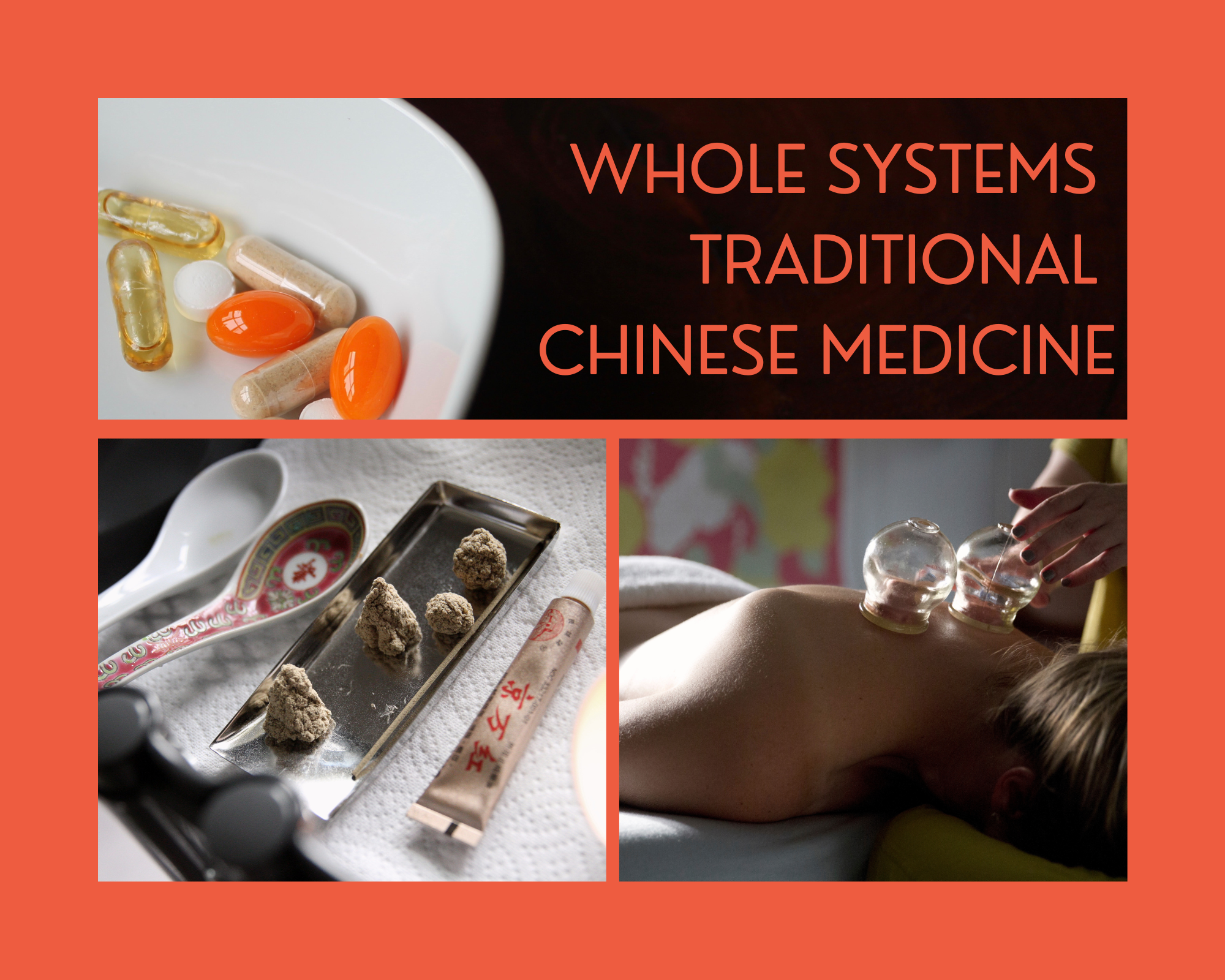
Whole Systems Traditional Chinese Medicine overlays a three photo collage: supplements in white bowl (upper left); two Chinese soup spoons, a small metal tray with four premade Moxa cones, and a tube of burn cream (lower left); a person face down on a massage table with glass cups being placed on their back (lower right).
If you are reading this, chances are you (or someone you love) are considering IVF and wondering: does acupuncture actually help? It is a fair question. The internet is full of opinions, but I prefer data. So let me walk you through my own research, spanning over a decade, that explores how a comprehensive approach to Traditional Chinese Medicine may change IVF outcomes for the better.
Spoiler alert: not all acupuncture approaches are created equal.
First, Let's Clear Up a Common Misconception
When most people hear "acupuncture and IVF," they picture two quick acupuncture sessions on embryo transfer day. That is the version most commonly studied in clinical trials, and the research on that limited approach is genuinely mixed.
Two major systematic reviews published in 2019 help us make sense of the evidence. Smith and colleagues analyzed 20 randomized controlled trials involving 5,130 women and found that acupuncture around the time of fresh embryo transfer was associated with a 30% increase in live births and a 32% increase in clinical pregnancies compared with no additional treatment. However, when acupuncture was compared with a sham (placebo) control, the difference disappeared (Smith et al., 2019). Their subgroup analysis revealed something important: studies that used three or more acupuncture sessions showed significantly improved pregnancy rates, while studies using fewer than three sessions did not.
Xie and colleagues reached a similar conclusion in their review of 27 trials and 6,116 women. Overall, acupuncture improved clinical pregnancy rates, but the benefit was most pronounced in women who had a history of prior unsuccessful IVF cycles, where they found a 60% increase in clinical pregnancy and a 42% increase in live birth. Again, the number of acupuncture treatments emerged as a significant factor (Xie et al., 2019).
So here is what gets lost in the "does acupuncture help IVF?" conversation: two sessions is not how acupuncturists actually treat fertility patients. In real life, treatment is individualized. It unfolds over weeks or months. And it often includes much more than needles alone.
That is the version I studied. We call it Whole Systems Traditional Chinese Medicine, or WS-TCM.*
What Is Whole Systems TCM?
WS-TCM is the full clinical experience a patient receives when they work with a trained acupuncturist who specializes in fertility and TCM. It can include any combination of:
- Individualized acupuncture (tailored to your specific diagnosis, not a one-size-fits-all protocol)
- Electroacupuncture
- Chinese herbal medicine (when appropriate)
- Moxibustion (a warming therapy using the herb artemisia)
- Chinese medicine-based dietary recommendations
- Lifestyle modifications
- Nutritional supplement guidance
Think of it this way: if two acupuncture sessions on transfer day are like taking a single vitamin, WS-TCM is the whole wellness plan.
The Study That Started It All (2015)
My team and I published our first major study in 2015 in the journal Reproductive BioMedicine Online. We reviewed the records of 1,231 IVF patients from a single fertility clinic in the Pacific Northwest. Every patient had a fresh embryo transfer between 2005 and 2010. We divided them into three groups based on what additional support they received:
1. IVF alone (580 patients): Standard fertility care with no additional therapies.
2. Transfer day acupuncture (370 patients): IVF plus two standardized acupuncture sessions on the day of embryo transfer.
3. WS-TCM (119 patients): IVF, transfer day acupuncture, AND individualized acupuncture and TCM therapies in the weeks and months before the transfer.
The WS-TCM patients averaged about 12 treatment visits before their embryo transfer. And here is what we found:
Live birth rates for non-donor cycles:
- IVF alone: 48.2%
- Transfer day acupuncture: 50.8%
- WS-TCM: 61.3%
After adjusting for factors like age, prior IVF cycles, and medication dosages, WS-TCM was associated with roughly twice the odds of a live birth compared with IVF alone (adjusted odds ratio 2.09). It was also associated with significantly greater odds of live birth compared with transfer day acupuncture only (adjusted odds ratio 1.62).
For donor egg cycles, the pattern held up. The WS-TCM group had an 85.7% live birth rate, compared with 62.5% for IVF alone and 59.5% for transfer day acupuncture (Hullender Rubin et al., 2015).
We also observed that WS-TCM patients had significantly fewer biochemical pregnancies (those very early losses that show a positive test but never develop further) and clinically fewer spontaneous abortions compared with the other groups.
Now, I want to be transparent: this was a retrospective study, meaning we looked back at existing records rather than randomly assigning patients to groups. Women who chose WS-TCM may have differed from the other groups in ways we could not measure. The WS-TCM group also had a higher rate of diminished ovarian reserve diagnosis, which typically makes IVF harder, not easier. So if anything, the deck was stacked against them.
Does Age Matter? (2017)
After publishing the 2015 study, a logical next question emerged: does WS-TCM help patients across all age groups, or does it matter more at certain ages?
To find out, we conducted a secondary analysis of the same patient cohort and presented it at the 2017 American Society for Reproductive Medicine (ASRM) Scientific Congress. We stratified the results by five age groups: under 35, 35 to 37, 38 to 40, 41 to 42, and 43 and older.
Here is what stood out:
For women aged 38 to 40, WS-TCM was associated with a live birth rate of 54.2%, compared with 31.5% for IVF alone (p=0.04). That is a meaningful difference for a group where success rates typically drop.
For women aged 41 to 42, the results were even more striking. The WS-TCM live birth rate was 60.0% compared with 19.2% for IVF alone and 19.0% for transfer day acupuncture. The adjusted odds ratio for WS-TCM in this age group was 17.35 (yes, you read that right), though the confidence interval was very wide (1.88 to 160.04) because only five WS-TCM patients fell into this group.
For patients under 35 and those 35 to 37, we saw clinically relevant differences favoring WS-TCM, though they did not reach statistical significance. The confidence intervals were broad across all age groups, which tells us we need larger studies to confirm these patterns.
The takeaway? Age may be an important consideration when integrating acupuncture or WS-TCM with IVF, and WS-TCM may particularly benefit women aged 38 and older (Hullender Rubin et al., 2017).
What About Frozen Embryo Transfers? (2020)
Most of my earlier research focused on fresh IVF cycles, but frozen embryo transfers (FET) have become increasingly common. So in 2020, my colleagues and I presented a new study at the ASRM Scientific Congress, this time looking specifically at FET outcomes.
We reviewed 275 FET cycles at a Portland fertility clinic. All cycles used the patient's own embryos without genetic screening. We categorized patients into three groups:
1. Usual care (181 cycles): FET with no additional therapies.
2. Transfer day acupuncture (33 cycles): Two standardized acupuncture sessions on the day of transfer.
3. TCM group (61 cycles): Transfer day acupuncture PLUS three or more individualized acupuncture sessions with TCM therapies (diet and lifestyle modifications, warming therapy, and Chinese herbal therapy when appropriate) received in the community before the transfer.
Live birth rates:
- Usual care: 50.5%
- Transfer day acupuncture: 33.3%
- TCM group: 59.0%
The TCM group had significantly more live births than the transfer day acupuncture group (p=0.02). There was no statistical difference between the TCM group and usual care, but the TCM group was older on average (mean age 37.3 vs. 35.8, p=0.04), which typically works against IVF success.
Miscarriage rates were also lower in the TCM group (6.6%) compared with usual care (12.5%) and transfer day acupuncture (12.1%), although these differences did not reach statistical significance given the small sample sizes.
This study reinforced a key theme: the number of acupuncture sessions matters. Three or more individualized sessions outperformed two standardized sessions, at least in this group of women with unscreened embryos (Hullender Rubin et al., 2020a).
But What If the Embryos Are Already Genetically Screened? (2020)
This is where things get really interesting. At the same ASRM meeting, we also presented a second study looking at FET cycles where embryos had undergone comprehensive chromosomal screening (CCS). These are embryos confirmed to be chromosomally normal (euploid) before transfer. It is a completely different clinical scenario because the biggest variable in IVF success, embryo genetics, has already been optimized.
We reviewed 1,035 FET-CCS cycles from the same Portland clinic: 526 in usual care, 150 in transfer day acupuncture, and 359 in the TCM group.
Live birth rates:
- Usual care: 67.7%
- Transfer day acupuncture: 55.3%
- TCM group: 64.6%
Here, the TCM group and usual care performed similarly on live births (p=0.35). But both groups had significantly more live births than transfer day acupuncture (p=0.005 and p=0.05, respectively). Miscarriage told the same story: usual care (6.6%) and TCM (8.9%) were comparable, while transfer day acupuncture had a notably higher rate (15.3%, p=0.001 and 0.03, respectively).
So what do we make of this? When embryos are already confirmed chromosomally normal, the WS-TCM advantage over usual care disappears. This is actually a revealing finding. It suggests that part of the benefit we see in the non-screened studies may relate to WS-TCM's potential effects on embryo quality itself, not just implantation. When you remove the embryo quality variable by only transferring euploid embryos, the playing field may level out between WS-TCM and standard care.
The other consistent finding is that two standardized acupuncture sessions on transfer day continue to underperform. In these CCS cycles, transfer day acupuncture was associated with fewer live births and more miscarriages than both other groups. This is an observational finding, and patients who chose different approaches may have differed in ways we could not measure. But it adds to the pattern we see across all of our studies: a limited acupuncture dose does not appear to help, and may not be the right approach for supporting embryo transfers (Hullender Rubin et al., 2020b).
Independent Replication from China (2023)
One study from my own group is one thing. But does the WS-TCM effect hold up when a completely different team, in a different country, with a different patient population and different TCM protocols, asks the same question?
In 2023, Song and colleagues at Shandong University of Traditional Chinese Medicine published the largest WS-TCM and IVF study to date in the European Journal of Integrative Medicine. They reviewed 2,733 patients who underwent either fresh embryo transfers (1,048 patients) or frozen embryo transfers (1,685 patients) between 2018 and 2021. Their WS-TCM intervention included Chinese herbal medicine (a decoction for menstrual cycle regulation taken for four weeks), acupuncture every 48 hours from end of menses until embryo transfer, herb-partitioned moxibustion at the umbilicus every 72 hours during ovarian stimulation, and dietary and lifestyle guidance.
What makes this study particularly robust is the statistical methodology. They used propensity score matching (pairing each WS-TCM patient with two similar non-WS-TCM patients) to control for confounding variables, plus multivariable logistic regression. This is a significant step up from unmatched retrospective comparisons.
For fresh embryo transfer cycles (after propensity score matching): the live birth rate per individual transfer was similar between WS-TCM and non-WS-TCM groups (39.9% vs. 38.0%, p=0.604). However, the cumulative live birth rate (accounting for all transfers from one egg retrieval cycle) was significantly higher in the WS-TCM group (60.5% vs. 52.7%, p=0.045). The WS-TCM group also required lower doses of gonadotropin medications, produced more mature oocytes, and had more high-quality blastocysts. In other words, the intervention appeared to improve egg and embryo quality, giving patients more chances at success even if each individual transfer did not show a dramatic difference.
For frozen embryo transfer cycles (after propensity score matching): WS-TCM showed a significant improvement in live birth rate per transfer (42.7% vs. 35.3%, p=0.019). This held up in the multivariable regression analysis (adjusted odds ratio 1.28, 95% CI 1.01 to 1.63, p=0.044).
This study matters because it independently confirms the core findings from my research in a population of over 2,700 patients. Different continent, different herbal formulas, different acupuncture protocols, same conclusion: WS-TCM as an adjuvant to IVF is associated with improved outcomes, particularly in frozen embryo transfer cycles and in cumulative live birth rates (Song et al., 2023).
So What Does All This Mean for You?
Let me distill the big messages from over a decade of this research, now supported by independent replication:
More sessions, not fewer. Two acupuncture sessions on transfer day alone do not appear to move the needle on live birth rates in a consistent way. Both the Smith et al. and Xie et al. meta-analyses from 2019 confirm this: the number of acupuncture sessions is a significant factor in outcomes. Across all of my studies, and in the Song et al. replication, transfer day acupuncture alone either showed no benefit or was associated with worse outcomes than both WS-TCM and standard care. When patients receive individualized treatment over multiple sessions in the weeks and months leading up to transfer, the results look different.
The whole system matters. WS-TCM is not just about sticking needles in specific points. It is an integrated approach that includes acupuncture, dietary guidance, lifestyle changes, stress management, and possibly herbal medicine. These components work together. The Song et al. study found that WS-TCM patients required lower medication doses and produced higher quality embryos, suggesting the benefits may begin well before transfer day. Whole systems research evaluates the combined effect of a complex intervention rather than trying to isolate one single ingredient, because in real clinical practice, these elements do not exist in isolation.
WS-TCM may improve embryo quality. Our CCS study offers a fascinating clue. When embryos are already confirmed chromosomally normal, the WS-TCM advantage over standard care disappears. But in non-screened cycles (where embryo quality varies), WS-TCM consistently shows higher live birth rates. The Song et al. team observed the same pattern: more mature oocytes and more high-quality blastocysts in the WS-TCM group. Taken together, this suggests that WS-TCM may be doing some of its most important work at the level of egg and embryo quality.
Age is a factor, but not a barrier. The data suggests that WS-TCM may be especially beneficial for women 38 and older, a population where every percentage point in live birth rates is hard won. While smaller sample sizes in the older age groups mean we should interpret these results with caution, the trends are encouraging.
Individualized care is key. In all of my studies, the WS-TCM treatment was tailored to each patient's unique TCM diagnosis, menstrual cycle phase, and IVF protocol stage. This is how acupuncturists actually practice in the real world, and it appears to produce better outcomes than a standardized, one-size-fits-all approach.
What This Research Cannot Tell Us (Yet)
I believe in being honest about the limitations of this body of work. All of these studies, including the Song et al. replication, are retrospective or observational. That means we cannot prove that WS-TCM caused the improved outcomes. Women who seek out comprehensive acupuncture care may differ from those who do not in ways that are difficult to measure: motivation, resources, general health behaviors, and more. The Song et al. team used propensity score matching to address this, which strengthens their findings, but unmeasured confounders may still exist.
The sample sizes in some of my subgroups (particularly older age groups and the non-CCS FET study) are small, which means the confidence intervals are wide and the results are less precise. The two 2020 FET abstracts also have the inherent limitations of conference abstracts: they have not undergone the same level of peer review as full journal articles.
What we really need is a prospective, randomized trial comparing individualized WS-TCM with an appropriate control to determine whether these associations hold up under more rigorous testing. Both Smith et al. (2019) and Xie et al. (2019) call for exactly this kind of research: trials that explore different acupuncture dosing regimens and the specific components that contribute to improved outcomes.
Until then, the evidence we have is promising. And as someone who has spent her career on both sides of the treatment table (as both a researcher and a clinician), I find it compelling enough to continue investigating and to continue treating patients with this approach.
The Bottom Line
If you are considering acupuncture to support your IVF cycle, I encourage you to look for a practitioner who offers more than transfer day acupuncture alone. Seek someone who is trained in reproductive medicine, who will create an individualized treatment plan, and who will work with you over multiple sessions leading up to your transfer. That comprehensive, whole systems approach is the version of TCM that my research, and now independent research from China involving thousands of patients, supports.
Your fertility journey is personal, complex, and deserves care that reflects both of those qualities.
References
Hullender Rubin LE, Opsahl MS, Wiemer KE, Mist SD, Caughey AB. Impact of whole systems traditional Chinese medicine on in-vitro fertilization outcomes. Reproductive BioMedicine Online. 2015;30(6):602-612.
Hullender Rubin L, Opsahl MS, Wiemer KE, Mist S. Live births in women who integrate whole systems traditional Chinese medicine with IVF: does age matter? Fertility and Sterility. 2017;108(3):e352.
Hullender Rubin L, Sgarlata CS, Hogue M, Pate L, Richards E, Tongel LK, Jin H. (a) Birth outcomes from acupuncture added to frozen embryo transfer (FET) of autologous embryos without genetic screening: a retrospective cohort study. Fertility and Sterility. 2020;114(3):e330.
Hullender Rubin L, Sgarlata CS, Hogue M, Pate L, Richards E, Tongel LK, Jin H. (b) Impact of acupuncture and traditional Chinese medicine (TCM) on frozen embryo transfers (FET) of autologous embryos with comprehensive chromosomal screening (CCS): a retrospective cohort study. Fertility and Sterility. 2020;114(3):e450-e451.
Smith CA, Armour M, Shewamene Z, Tan HY, Norman RJ, Johnson NP. Acupuncture performed around the time of embryo transfer: a systematic review and meta-analysis. Reproductive BioMedicine Online. 2019;38(3):364-379.
Song JY, Dong FY, Wu ZJ, Ma YX, Sun ZG. Impact of whole-systems traditional Chinese medicine therapy on in vitro fertilization and embryo transfer outcomes: a retrospective cohort study. European Journal of Integrative Medicine. 2023;60:102246.
Xie ZY, Peng ZH, Yao B, Chen L, Mu YY, Cheng J, Li Q, Luo X, Yang PY, Xia YB. The effects of acupuncture on pregnancy outcomes of in vitro fertilization: a systematic review and meta-analysis. BMC Complementary and Alternative Medicine. 2019;19(1):131