

Microbiome and Fertility: How Gut and Uterine Bacteria Affect Conception, IVF, and Implantation
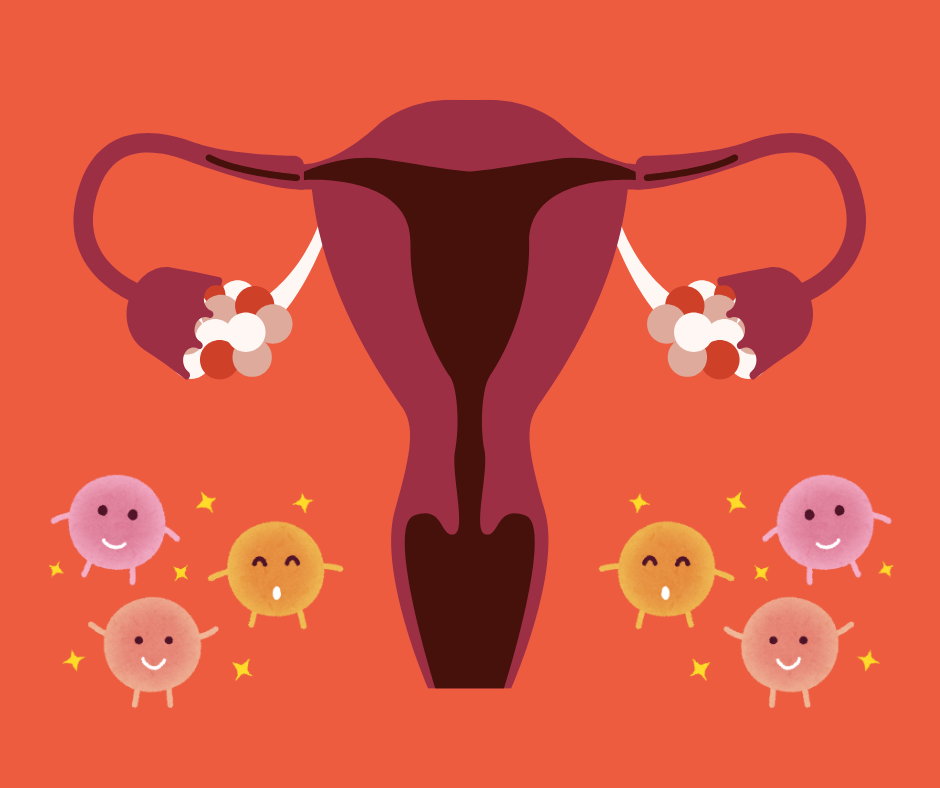
A uterus in burgundy and orange colors surrounded by happy microbes
By Lee Hullender Rubin, DAoM, MS, LAc, FABoRM
Here's something most fertility patients are never told: the uterus is not sterile. Neither is the cervix, the fallopian tubes, or the ovaries. Every compartment of your reproductive tract is home to a community of microorganisms, and whether those communities are balanced or disrupted could be influencing your ability to conceive right now.
Three new reviews published in early 2026 in Fertility and Sterility bring this evidence sharply into focus. If you've experienced failed IVF cycles, recurrent pregnancy loss, or unexplained infertility, this research may change how you think about your next steps. A third review from Karolinska Institutet examined how clinicians should actually use microbiome diagnostics in practice adding an important layer of caution. The science is compelling, but most of these associations are observational, and the clinical tools to act on them are still catching up.
The Ecosystem Inside You
Your reproductive microbiome functions like a tiny internal ecosystem. In a healthy state, a group of bacteria called Lactobacillus dominates in the vagina, cervix, and uterus alike. These bacteria create an acidic, low-inflammation environment that resists infection, supports immune tolerance, and is associated with improved rates of embryo implantation. Researchers have even found that Lactobacillus crispatus, one specific strain, may help trophoblast cells invade the uterine lining — a critical step in early pregnancy.
When that ecosystem tips out of balance with Lactobacillus declining and opportunistic bacteria like Gardnerella, Atopobium, and Prevotella moving in, it is called dysbiosis. And, dysbiosis appears throughout the fertility literature like a red flag that deserves more attention.
When Implantation Keeps Failing
Recurrent implantation failure is one of the most frustrating diagnoses in reproductive medicine, in part because it often has no obvious explanation. The endometrial microbiome may be providing answers that standard testing overlooks.
Research cited in the 2026 review by Hiratsuka, Matsuo, and Hirota from the University of Tokyo found that a uterine environment with more than 10% non-Lactobacillus bacteria was associated with implantation rates of 23% compared to 61% in people with Lactobacillus-dominant microbiomes.
Live birth rates told an even starker story: 7% in people with the non-Lactobacillus bacteria versus 59% with Lactobacillus-dominant microbiomes. These are not small differences. They suggest that for some patients, the microbial environment of the uterus may be a barrier standing between a failed transfer and a baby.
Chronic Endometritis: The Silent Saboteur
Chronic endometritis is persistent, low-grade inflammation of the uterine lining which often causes no symptoms at all. You can feel completely fine and still have it. Yet studies find it in 30–69% of women with recurrent implantation failure or recurrent pregnancy loss. Bacteria like Ureaplasma, E. coli, Enterococcus, and Gardnerella are frequently implicated, and Lactobacillus levels in affected women are dramatically reduced, sometimes as low as 1.9%, compared to over 80% in unaffected women.
Antibiotic treatment, typically a two-week course of doxycycline, resolves CE in roughly 89% of cases and has been associated with improved pregnancy rates in many observational studies. The evidence isn't airtight. One recent randomized controlled trial found no improvement in cumulative live birth rates in RPL patients. But, targeted treatment of confirmed dysbiosis, combining antibiotics with vaginal probiotics, appeared to offer the most consistent benefit.
PCOS Might Start in the Gut
If you have polycystic ovary syndrome, the microbiome conversation doesn't end at your reproductive tract, it begins in your gut. Women and people with PCOS consistently show reduced gut microbial diversity, depleted populations of beneficial short-chain fatty acid-producing bacteria, and elevated levels of inflammatory, LPS-producing bacteria. Elevated circulating LPS correlates directly with higher testosterone, larger ovarian volume, more irregular cycles, and worse insulin resistance.
Even in lean, young women and people with PCOS, these endotoxemia markers run about 20% higher than in controls. The gut isn't a bystander. Whether it's a contributing driver or a downstream reflection of the same hormonal disruption is still being studied, but the correlation is consistent across populations. Dietary fiber, targeted probiotic and prebiotic supplementation, and even metformin appear to exert some of their benefit by reshaping the gut microbial environment.
What Your Gut Has to Do With Your Uterus
One of the more compelling ideas to emerge from this body of research is the gut-uterus axis. As MacIntyre and Norman describe in their 2026 editorial, intestinal dysbiosis generates systemic inflammatory signals, disrupts hormone metabolism, and alters immune tone, effects that travel via the bloodstream and land squarely in the reproductive tract. Your gut and your uterus are in constant conversation. When the gut is inflamed and imbalanced, the uterus often reflects that.
What You Can Do Today
The science is still catching up to clinical implementation, but several strategies are well-supported:
Feed your beneficial bacteria. A fiber-rich, whole-food diet fuels Lactobacillus and Short Chain Fatty Acids (SCFA)-producing gut bacteria, reduces systemic inflammation, and improves insulin sensitivity. This matters especially if you have PCOS or are heading into an IVF cycle. A wide variety of plant foods is important here.
Ask about vaginal probiotics specifically. Some studies suggest that vaginal administration of Lactobacillus-based probiotics is more effective than oral supplementation for restoring the uterine microbiome. Combined antibiotic and vaginal probiotic regimens have shown the most consistent results in small studies of women with confirmed dysbiosis, though large randomized trials are still needed.
Consider endometrial microbiome testing. Some fertility centers now offer 16S rRNA sequencing of the uterine environment called EMT alongside standard workups. For women with RIF, some studies of targeted testing followed by individualized treatment have reported 1.2 to 2.0-fold improvements in clinical pregnancy rates compared to unselected cohorts. Be aware that commercial endometrial tests like EMMA and ALICE were widely adopted before their sensitivity, specificity, and inter-lab reproducibility were fully established. They are best considered adjunctive tools in consultation with your care team, not standalone diagnostics.
Treat bacterial vaginosis before conception. BV-like vaginal dysbiosis is consistently linked to miscarriage and preterm birth. If you have it, treating it early, ideally before 20 weeks of pregnancy, appears to reduce those risks.
The Conversation to Have With Your Fertility Doctor
Microbiome testing in fertility care is not yet standard, and guidelines are still evolving. But the evidence is suggestive enough that if you've experienced repeated implantation failure, unexplained RPL, or have PCOS or endometriosis, it's worth raising with your reproductive endocrinologist. Ask whether endometrial microbiome assessment makes sense in your case. Ask about vaginal probiotic options. Ask what your clinic's approach to chronic endometritis testing looks like.
The bacteria living inside you are not incidental to your fertility. For many people, they are part of the answer.
References:
Hiratsuka D, Matsuo M, Hirota Y. The reproductive tract microbiome and female fertility: dysbiosis, disease links, and emerging therapeutic strategies. Fertil Steril. 2026. https://doi.org/10.1016/j.fertnstert.2026.01.010
MacIntyre DA, Norman RJ. The microbiome: a determinant of reproductive health and fitness? Fertil Steril.2026. https://doi.org/10.1016/j.fertnstert.2026.02.017
Dash S, Zhao D, Schuppe-Koistinen I, Du J. Female reproductive microbiome in fertility care. Fertil Steril. 2026. https://doi.org/10.1016/j.fertnstert.2026.02.015