

Acupuncture for IVF Anxiety: What My Meta-Analysis of 2,253 Patients Found
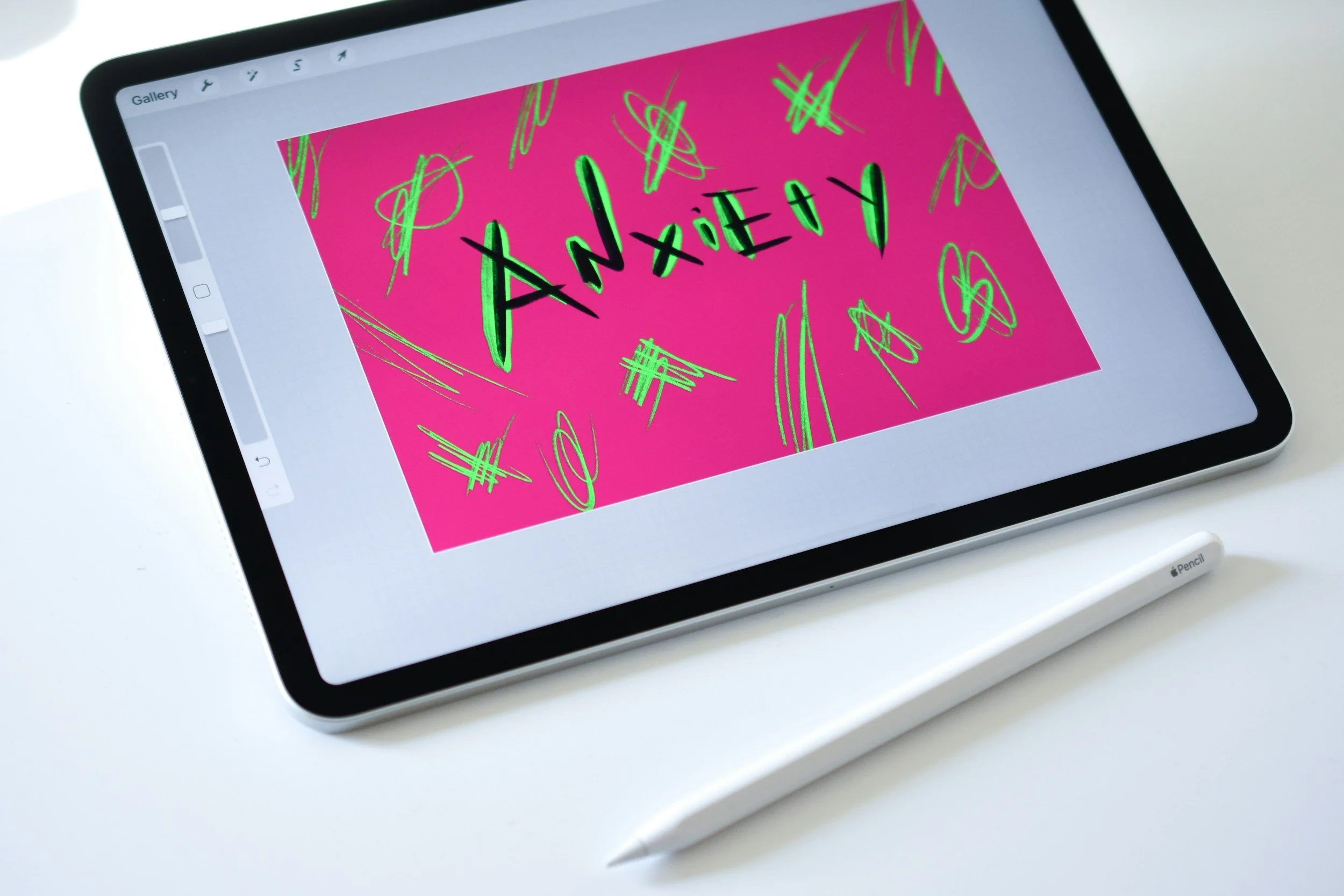
An iPad with an image that appears hand drawn with the pencil. the image is hot pink with neon green scribbles and the word ANXIETY written in uneven letters.
By Lee Hullender Rubin, DAoM, MS, LAc, FABORM
Let me tell you something that rarely makes it into the IVF success rate conversations: nearly 40% of women who stop IVF treatment do so not because of a failed cycle, but because the emotional burden becomes too much to bear. Not the injections. Not the cost. The stress.
If you have been through IVF, or are about to start, you already know this in your bones. The waiting, the uncertainty, the hope that gets built up and sometimes knocked down. An estimated 75.9% of women seeking fertility care are clinically anxious. That is not a personality flaw. That is a normal human response to an extraordinarily demanding process.
So when patients ask me, "Can acupuncture help with the anxiety part of IVF?" I do not just draw on 24 years of clinical experience. I draw on a systematic review and meta-analysis I led, published in Reproductive BioMedicine Online in 2022, that analyzed every randomized controlled trial ever conducted on this exact question.
Here is what we found.
The Emotional Toll of IVF Is Real (and Undertreated)
Before diving into the research, let me paint the picture that motivated this study.
IVF is stressful at every stage. The medication injections, the monitoring appointments, the egg retrieval, the agonizing wait between embryo transfer and pregnancy test. Anxiety levels spike around the moments that feel most high stakes: retrieval day and transfer day.
This anxiety is not just unpleasant. It takes a toll. Research shows that psychological distress leads patients to abandon treatment before pregnancy is achieved. It affects quality of life. It strains relationships. And caring for anxious patients impacts the entire healthcare team.
Pharmacological options for anxiety during IVF are limited. Antidepressants taken during an IVF cycle have been associated with fewer pregnancies. Antidepressants taken during artificial insemination cycles have been associated with an increased risk of pregnancy loss. So patients and their doctors are understandably cautious about adding psychiatric medications during fertility treatment.
This is where acupuncture enters the conversation. It is drug-free. It is safe. And patients consistently report feeling calmer after treatment. But does the science back that up? That is what I set out to determine.
What We Did: A Systematic Review and Meta-Analysis
My co-authors and I searched five major medical databases for every randomized controlled trial that measured anxiety in IVF patients who received acupuncture compared with a control group. We registered our protocol in advance with PROSPERO (the international registry for systematic reviews) and followed the PRISMA guidelines for transparent reporting.
We found eight trials involving 2,253 women, of whom 1,785 completed an anxiety assessment. The trials spanned six countries (Sweden, Australia, Hong Kong, the USA, and Brazil) and used a range of validated anxiety scales, primarily the State-Trait Anxiety Inventory (STAI), which is the gold standard for measuring situational anxiety.
The control groups varied: some used sham acupuncture (non-penetrating needles or needles placed off true acupuncture points), some used no additional treatment, and some compared acupuncture with medication during egg retrieval.
What We Found
Using a random effects model (the statistical approach best suited for combining studies that differ from one another), acupuncture provided a small but statistically significant reduction in IVF-related state anxiety compared with any control treatment (standardized mean difference of negative 0.21, 95% confidence interval negative 0.39 to negative 0.04).
Let me translate that into plain language. Across all eight trials, women who received acupuncture reported measurably less anxiety after their IVF procedures than women in the control groups. The effect was modest, not dramatic, but it was real and it was consistent enough to reach statistical significance across a diverse set of studies.
Here are some of the more specific findings:
Acupuncture on transfer day reduces anxiety.
In the five studies looking at up to two acupuncture sessions on the day of embryo transfer, anxiety was significantly lower in the acupuncture group. This is notable because even a limited dose of acupuncture (two sessions) appears to provide meaningful emotional support on what is often the most nerve-wracking day of the entire IVF cycle.
The effect holds when acupuncture is compared with no treatment.
When we separated the studies by control type, acupuncture significantly reduced state anxiety compared with no acupuncture or other treatment (three trials, 578 participants, SMD negative 0.30). When compared with sham acupuncture, the difference did not reach significance, which is a pattern seen across acupuncture research and may reflect the fact that sham needles are not truly inert.
Acupuncture's anxiety benefit is comparable to psychological therapy.
A previous meta-analysis of psychological interventions for IVF patients (things like cognitive behavioral therapy and counseling) found a similar effect size. This means acupuncture holds its own alongside established mental health interventions for this population.
Acupuncture is safe during IVF.
Across the included trials, there was no increase in miscarriage, ectopic pregnancy, or other adverse events in the acupuncture groups. The most common side effect was mild itching at needle sites, and interestingly, this was more frequent in the sham control groups than in the real acupuncture groups.
What This Study Cannot Tell Us
I believe strongly in being upfront about the limitations of my own research.
The evidence is rated "very low certainty" under the GRADE framework, which is the system used to evaluate the quality of evidence in systematic reviews. That sounds alarming, but it is important to understand what drives that rating. The main issues are performance bias (it is very difficult to blind someone to whether they are receiving real acupuncture), heterogeneity (the studies differed in how they delivered acupuncture and how they measured anxiety), and a moderate number of included studies with intermediate sample sizes.
We also suspect publication bias. Only three of the eight studies were registered in a clinical trial registry, and the authors of two unpublished studies did not respond to our requests for data. When we restricted the analysis to only registered trials, the anxiety benefit was no longer significant. This is a common challenge in acupuncture research and a reason more registered, pre-specified trials are needed.
The bottom line is that the signal is there, the direction is consistent, and the intervention is safe, but we need more and better trials to strengthen the certainty of the conclusion.
From Clinical Trials to Real-World Practice: The University Hospitals Study (2025)
Clinical trials tell us what happens under controlled conditions. But what does acupuncture actually look like when it is integrated into a real fertility clinic, with real patients, receiving individualized care?
A 2025 study published in Global Advances in Integrative Medicine and Health helps answer that question. Researchers at University Hospitals Cleveland and Case Western Reserve University reviewed 1,896 WS-TCM treatments provided to 146 patients during 202 embryo transfers at their academic fertility center between 2019 and 2022.
This was not a clinical trial. It was a retrospective look at what happens when WS-TCM is embedded within a fertility clinic as part of standard integrative care. Patients received individualized acupuncture, ear seeds, TDP heat lamps, electroacupuncture, dietary and lifestyle guidance, and herbal counseling as part of their treatment. The median number of treatments per embryo transfer was four, though some patients received far more.
Before and after each treatment, patients rated their pain, stress, and anxiety on a 0 to 10 numeric scale. Among patients reporting symptoms of at least 1 out of 10 before treatment, the results were striking:
Pain dropped an average of 1.38 points within a single treatment session.
Stress dropped an average of 2.11 points within a single session.
Anxiety dropped an average of 2.22 points within a single session.
All of these reductions are considered clinically significant, meaning they represent changes patients can actually feel, not just statistical blips.
Over a quarter of the patients (26.7%) had a documented mental health diagnosis in their medical record, with anxiety disorder being the most common at 20.5%. This underscores the reality that many people going through IVF are carrying a significant psychological load, and having an integrated, drug-free option available within the fertility clinic itself is valuable.
This study has its limitations. There was no control group, so we cannot say for certain that the improvements were caused by WS-TCM rather than other factors like the therapeutic relationship, time spent resting, or placebo effects. The patient-reported outcome data was only collected for a subset of treatments, and the study came from a single academic center. But what it does tell us is that in a real clinical setting, with real patients and real individualized treatments, acupuncture is associated with immediate, meaningful reductions in the very symptoms that make IVF so hard.
Why This Matters for Your IVF Journey
If you are considering IVF, or you are already in the middle of it, here is what I want you to take away from this research:
Your anxiety is not a personal failing.
The majority of people going through fertility treatment experience clinically significant anxiety. It is a predictable response to an uncertain, high-stakes process. Acknowledging it is the first step toward managing it.
Acupuncture can help, and it is safe.
My meta-analysis of eight randomized controlled trials shows a consistent, modest benefit for IVF-related anxiety, comparable to what psychological interventions achieve. Real-world data from University Hospitals Cleveland shows immediate, clinically significant reductions in anxiety, stress, and pain within individual treatment sessions. And across all the research, acupuncture is associated with no increase in adverse events during IVF.
A drug-free option matters during fertility treatment.
When psychiatric medications carry potential risks to IVF outcomes, having a safe, non-pharmacological alternative for managing anxiety is not just a nice-to-have. It is a clinical need.
The emotional experience of IVF deserves as much attention as the medical one.
We spend enormous energy optimizing egg quality, embryo grading, and transfer protocols. The psychological well-being of the person going through it all deserves the same level of care and investment.
If you are looking for acupuncture support during your IVF cycle, I encourage you to find a practitioner who is trained in reproductive medicine and can work in coordination with your fertility team. The research supports it. Your well-being deserves it.
This is the second in a series of posts about my research. You can read the first post here.
References
Hullender Rubin LE, Smith CA, Schnyer RN, Tahir P, Pasch LA. Effect of acupuncture on IVF-related anxiety: a systematic review and meta-analysis. Reproductive BioMedicine Online. 2022;45(1):69-80.
Lu R, Rodgers-Melnick SN, Flyckt R, Kim ST, Srinivasan R, Dusek JA, Kaiser CM. Clinical delivery of whole systems traditional Chinese medicine and impacts upon patient reported outcomes during IVF. Global Advances in Integrative Medicine and Health. 2025;14:1-10.
Domar AD, Rooney K, Hacker MR, Sakkas D, Dodge LE. Burden of care is the primary reason why insured women terminate in vitro fertilization treatment. Fertility and Sterility. 2018;109(6):1121-1126.
Pasch LA, Holley SR, Bleil ME, Shehab D, Katz PP, Adler NE. Addressing the needs of fertility treatment patients and their partners: are they informed of and do they receive mental health services? Fertility and Sterility. 2016;106(1):209-215.
Cesta CE, Viktorin A, Olsson H, et al. Depression, anxiety, and antidepressant treatment in women: association with in vitro fertilization outcome. Fertility and Sterility. 2016;105(6):1594-1602.
Evans-Hoeker EA, Eisenberg E, Diamond MP, et al. Major depression, antidepressant use, and male and female fertility. Fertility and Sterility. 2018;109(5):879-887.
Smith CA, Armour M, Shewamene Z, Tan HY, Norman RJ, Johnson NP. Acupuncture performed around the time of embryo transfer: a systematic review and meta-analysis. Reproductive BioMedicine Online. 2019;38(3):364-379.